
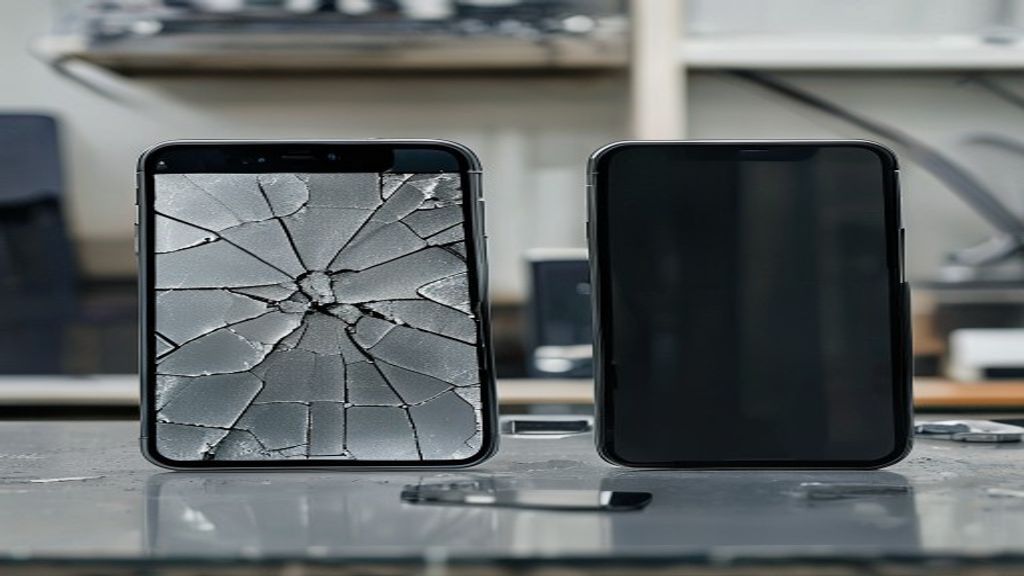
iPhone Screen Repair vs Replacement
When you bring a cracked iPhone to a repair shop, you might hear the terms ‘screen repair’ and ‘screen replacement’ used interchangeably — or you might hear them described as different things with different prices. Which is it? The truth is that on most modern iPhones, there is no meaningful difference between ‘repair’ and ‘replacement’ because the screen is a single integrated assembly. But on some iPhones and under some circumstances, the distinction matters. Here is what it actually means and how to know what your iPhone needs.
The historical distinction: repair vs replacement
On iPhones through the iPhone 4S era, the screen had separate components — the outer glass digitizer and the LCD underneath were two distinct parts. A ‘screen repair’ would replace only the cracked outer glass, leaving the original LCD intact. A ‘full replacement’ would swap both. This meant you could save money on small cracks by doing a glass-only repair. That era ended when Apple transitioned to laminated (fused) displays starting with the iPhone 5.
Modern iPhones: one integrated display assembly
Every iPhone from the iPhone 5 forward uses a laminated display where the glass, touch digitizer, and LCD or OLED panel are bonded together during manufacturing. You cannot replace just the glass without replacing everything else. Therefore ‘screen repair’ and ‘screen replacement’ on a modern iPhone mean the same thing: replacing the complete display assembly. Any shop that offers you ‘glass-only repair’ on a modern iPhone is either lying or using a questionable refurbishing process where the glass is manually separated and a salvaged LCD is reused — quality varies dramatically.
Quality grade differences in ‘replacement’ screens
Where real price differences exist on modern iPhone screen work is in the grade of replacement part. OEM (original equipment manufacturer) grade uses genuine Apple-spec parts, often from Apple suppliers, and matches the original in brightness, color, touch sensitivity, and feature compatibility. Premium aftermarket uses high-quality third-party panels that approximate OEM but may differ subtly. Standard aftermarket uses cheaper panels with reduced brightness and color accuracy. Refurbished uses a salvaged LCD paired with new glass — quality varies enormously. At Indiana Phones we use OEM-grade for all screen repairs.
What ‘Apple Genuine’ means
Apple’s own screen repair (at Apple Stores and authorized service providers) uses what they call ‘Apple Genuine’ parts. These are new parts made by Apple’s suppliers specifically for repair use. Independent shops cannot technically call their parts ‘Apple Genuine’ unless they are Apple-certified, but high-quality OEM-grade parts from the same manufacturing lines are available on the open market and used by quality shops including Indiana Phones.
The one exception: iPad glass-only repair
iPads still have a meaningful repair-vs-replacement distinction on older models. iPads through iPad 6 (the non-laminated models) have separate digitizer glass and LCD, so glass-only repair is possible and significantly cheaper. iPad Air 2, iPad Pro, and newer iPads are laminated and require full display assembly replacement. If you have an older iPad with a cracked screen but working image underneath, ask about glass-only repair.
Should you go ‘cheap’ or ‘quality’ on screen replacement
Honest answer from a repair shop: for iPhones you plan to keep more than a year, pay for OEM-grade. Cheap aftermarket screens have degraded touch responsiveness after a few months, colors look slightly off, True Tone may not work, Face ID compatibility is hit or miss, and the screen itself has shorter lifespan. The difference in price between cheap and OEM-grade is typically $30-$80 — well worth it for a phone you will use daily for another year or two.
How to ask the right questions at a repair shop
Questions to ask any iPhone repair shop: What grade of screen do you use? (Listen for ‘OEM-grade’ or ‘original-spec’ not just ‘replacement’.) Does True Tone still work after repair? (Should be yes with quality parts and correct tools.) Does Face ID still work after repair? (Yes, if they properly transfer the Face ID module.) How long is your warranty? (30 days minimum, 90 is better.) Can I watch the repair? (Good shops allow this.) Do you have my model’s parts in stock? At Indiana Phones the answer to all of these is yes.
Get a free diagnostic
If your iPhone screen is cracked and you want to know your options, bring it to Indiana Phones in Pacific Beach. Free diagnostic, OEM-grade parts, 90-day warranty, same-day service on most models. Call (619) 577-3065 or visit 1630 Grand Ave.
Related Reading
Related Services
- Phone Repair San Diego (all devices)
- iPad Repair San Diego
- Samsung Galaxy Repair
- MacBook Repair
- Phone Battery Replacement
- iPhone screen repair service in San Diego
Frequently Asked Questions
What’s the difference between iPhone screen repair and replacement?
On every modern iPhone (iPhone 5 and newer), there is no meaningful difference — the screen is a single laminated assembly that must be replaced as one unit. On older iPhones, ‘repair’ could mean glass-only while ‘replacement’ meant the whole display.
Is it cheaper to repair or replace an iPhone screen?
Same thing on modern iPhones. Where price varies is in the grade of replacement part — OEM-grade costs more than aftermarket but delivers better quality, feature compatibility, and longer lifespan.
Can you replace just the glass on an iPhone?
Not on modern iPhones (iPhone 5 and newer). The glass is laminated to the LCD/OLED and must be replaced as one unit. Any shop offering ‘glass only’ repair is either using salvaged parts or misleading you.
Should I go to Apple or a local shop for screen replacement?
Apple uses genuine parts and offers consistent service but requires appointments and higher prices. Quality local shops like Indiana Phones use OEM-grade parts, offer same-day walk-in service, and typically charge less. Both are valid depending on what you value.
If you have a iPhone 12, learn about iPhone 12 screen replacement at our Pacific Beach shop.
Indiana Phones offers same-day iPhone 14 battery in Pacific Beach.
We also handle iPhone 13 Pro Max repair at Indiana Phones at Indiana Phones.
If you have a iPhone 13 Mini, learn about iPhone 13 Mini screen replacement at our Pacific Beach shop.
We also handle iPhone 16 repair at Indiana Phones at Indiana Phones.
Looking for iPhone 13 Pro back glass replacement? Walk in for a free diagnostic.